Change

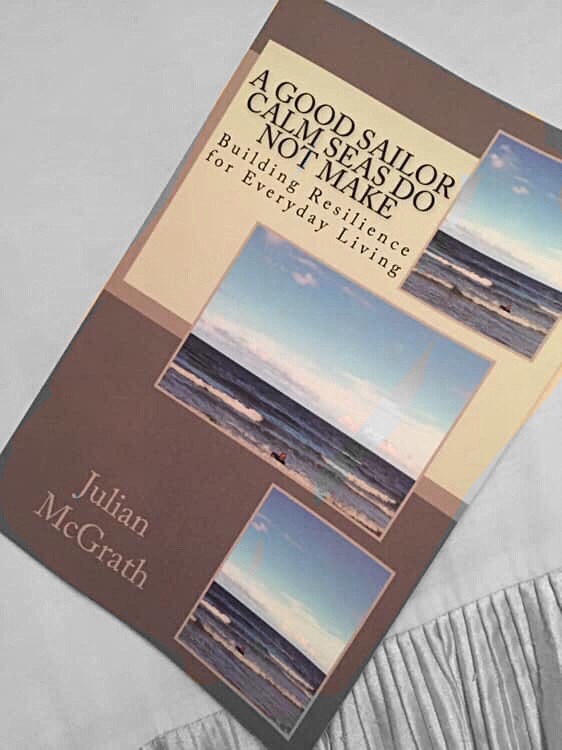
As we come to the end of another year, and the good ol’ well-intentioned, but often short-lived, New Year’s Resolutions, I was thinking about how many things change through the ‘seven ages of man’. I have been considering the extent to which most of us change as people, over the decades, with our uniquely personal ups and downs, our successes and our failures, our celebrations and our tribulations (there has been no shortage of these in 2020). In my book, A Good Sailor Calm Seas Do Not Make: Building Resilience for Everyday Living, I address how most of us fear change. We are often apprehensive about change because of a perceived loss of control over what is happening. Sometimes change is happening to us; sometimes around us; but also sometimes because of or by us. Nonetheless, much like death and taxes, change is an absolute inevitability. It is therefore necessary to accept change and, in many instances, we need to learn to embrace it. This means that we must also evolve and grow as individuals.

Life changes

And one man in his time plays many parts”, Shakespeare tells us, as far back as the end of the 16th century. It is therefore not solely a phenomena of modern psychology that both human-beings and circumstances become remodelled and reconstructed over time. Human-beings have acknowledged the existence of personal metamorphosis for centuries. The truth is you risk being left behind if you don’t adjust over time. You cannot continue to grow without some modification and reorientation of your views of life, of your relationship with those around you and of your relationship with yourself. Sometimes change in your life will lay bare what an a**hole you have been at some stage in the past…

“Seeking the bubble reputation. Even in the cannon’s mouth” (Jaques, As You Like It)

Most people experience some sort of reformation (sometimes multiple times, as Shakespeare suggests) during their lives. This is why friends and families may grow apart and even cultivate close bonds with new people at various stages in life. This is a natural process for sentient beings. Personal changes do not have to encompass all aspects of your life. These can be minor adjustments or alterations which those outside your inner circle may never notice; but even small changes can have a big impact over time.

Do not let anyone criticise you for your positive, personal transformation. Often old friends, accomplices or family members, are tied to the ‘old’ you. If they cannot accept that you have changed – for whatever personal reason or circumstance – then this is firmly their problem, not yours. Sadly, a small number of people get stuck and never grow or improve. As a result, they never accept your growth or improvement. Remember, this is their problem – do not let them make it yours by indulging them and do not offer up excuses or explanations as to why you have transformed some aspects of your life. You do not owe them this. I confront the issue of ‘dealing with others’ at some length in my book.

On the basis that I believe change is, in large part, a process of refinement of our ‘self’, then I am going to indulge in using the terms ‘change’ and ‘improvement’ synonymously for the next part. I believe that change can bring about personal improvement in four ways:

  1. It can make us better in terms of improving our everyday performance or service which we currently deliver. For example, in our professional life, change can come in the form polishing up what we do, refining it, tweaking it and revamping what we can offer. In our personal life we can enhance our relationships, build on friendships and boost our personal contentment (and that of others) as a consequence.
  2. Change can help us get better, become better, advance and progress into new areas in our professional or work life. We may learn a new skill or take a new course, get a new qualification, for instance. We can strive to get better at some things in our personal life. We might want to get better at running, get better at contacting friends, get better at practising & displaying gratitude, for example.
  3. Positive transformation can also lead to bigger things too. It can enlarge our lives, increase (if not the size, the quality of) our friendship circle, diversify the range of our personal interests and hobbies. These positive changes can greatly help augment our levels of personal resilience.
  4. Finally, and possibly most crucially, our most significant positive transformation may come from our recovery from something. This might be getting over illness, addiction, abuse, bullying, bereavement, divorce, an accident, job loss, bankruptcy etc. As the somewhat glib, over-simplified, saying goes, “what doesn’t kill you makes you stronger”. Over-coming trauma can certainly make you “stronger”, but it will most definitely almost always change you – often substantially. However, no two people, facing the same event, experience it the same way. Trauma is very personal to you, and it changes you. The outward manifestation of the changes may not always be present, but incontrovertibly you will have changed internally. When channelled appropriately, the act of over-coming a set-back can really help you grow as a person. The very best book I have ever read on how humans all respond in very varied and different ways to the same trauma is Viktor E Frankl’s, “Man’s Search for Meaning”, where he describes his first-hand experience of the Holocaust.

In summary, if you are not changing you are not growing. Do not let anyone criticise you for it. Enjoy it as you go, as in the…

Last scene of all, That ends this strange eventful history, Is second childishness and mere oblivion, Sans teeth, sans eyes, sans taste, sans everything.

Happy New Year and the very best of luck with those resolutions for 2021 😊

It has to be better than 2020… right?

Regret

This week I watched one of the latest BBC documentaries, “Anton Ferdinand: Football, Racism and Me”. The documentary logged one of the most painful experiences in Anton Ferdinand’s life. Just under ten years ago, he was racially abused on the football pitch by the England captain, John Terry. As the documentary unveiled the severity of the impact the incident had on Ferdinand, I was struck by how much regret Ferdinand has over how he reacted (or did not react) at the time.

More than once, during the course of the documentary, Ferdinand expresses regret that he did not put out more public statements and also put much more in those public statements. This regret seemed to plague him almost as much as the actions of Terry. In today’s post I consider whether this regret, whilst understandable, is helpful or even fair.

We all have regrets and look back, sometimes years, and castigate our former selves for things we did or said, or for things we didn’t do or say. I discuss how our past affects us in my book, “A Good Sailor Calm Seas Do Not Make: Building Resilience for Everyday Living”, and it is clear that past regret can really harm our self-worth. However, if we change how we view regret it can be kept in check and we can actually use it positively.

First, we are very often grossly unfair on ourselves when we wallow in regret. You see, we know now how everything panned out. We now have the benefit of hindsight and can view the incident in a mental state where we are potentially a few steps (or more) removed from the circumstances of the time. We know much more now than what we knew at that time and most importantly our feelings will have changed from how we felt in the moment.

Those who have read my work know that I promote strategies for reacting to things based on rational thought and not on the basis of “feelings” or emotions. Feelings are usually driven by fear and are usually inaccurate interpretations of a situation (or at best a partial understanding). Emotions are very much a human response nonetheless – given how our brains are wired. Professor Steve Peters deals with this much better than I do, in his book, “The Chimp Paradox”.

Everyone around Ferdinand, at the time of the racist abuse, guided him against speaking out publicly. Ferdinand recalls that he wanted to at the time. In essence he listened to those around him because they were trying to protect him. His regret is therefore unfair and unreasonable to himself.

The 26 year old lad accepted the advice for a reason. It was a reason which worked, at the time. He clearly felt ‘all over the place’ and the people he trusted most advised him to let the authorities go through their processes. John Terry was summonsed to court (as a member of the public reported it to police) and the English Football Association were investigating the incident. All the 26 year old wanted to do was play football.

So why the regret now? Ferdinand is in a classic case of where he now knows more than he possibly could have back then. He is projecting his knowledge in 2020 and unfairly criticising his 2011 self – who was not only younger, but was in a very different personal situation in a very different circumstance to what exists today. He now knows that football is taking racist incidents much more seriously and that understanding of the impact of these incidents is growing and is being highlighted by things like footballers ‘taking the knee’ before each match.

Ferdinand’s documentary touches on the incident where Liverpool Football Club rallied round its Uruguayan striker, Luis Suarez, after he made a racist remark to Manchester United’s, Patrice Evra. One of Ferdinand’s friends was a Liverpool player who rallied round his team-mate, Suarez. What the documentary does not focus on is the fact that the Suarez-Evra incident was 8 days before the Terry-Ferdinand one. Ferdinand was caught in a whirlwind in 2011 where he must have felt that people – even his white friends – would not understand his feelings. That is why he didn’t speak out in 2011. In 2020 this is changing and perhaps movements such as Black Lives Matter, has given him the confidence to speak out.

We view our past through a different lens and we forget the actual context of the past. Regret is useful, however, if we engage with it and try to understand it. We all make mistakes – small ones and big ones. We don’t have to get to a place where we are delusional and don’t believe that some of the things we did were mistakes – instead, we need to get to a place where we accept our human frailty and accept that we messed up and accept that our regret today is actually a sign of our growth. If we do not regret mistakes, or the hurt or the pain we may have caused others, then we are surely some sort of sociopath!

Nonetheless we have to temper our regret with understanding and compassion if we are to maintain our self-worth. We need, for example, to talk to our 20-something self the way we would talk to a 20-something lad coming to us seeking guidance. Ferdinand may feel regret, guilt and shame for not speaking out when he was racially abused. He may feel “he didn’t do enough” or that “he let black people down” (as some leading activists suggested at the time), but he can’t change his response in 2011, now. He cannot change the past so he needs to work through those feelings and understand his 26 year-old self and his predicament. He needs to understand why he did not feel powerful enough in 2011. His 2020 documentary is powerful – probably more-so because we hadn’t heard from him and probably more-so because we know how much he suffered in silence. His voice is powerful now – it might not have been in 2011 – and he needs to focus on that.

Regrets are always painful. They don’t have to be destructive though. With a compassionate view of your younger (and different) self, you can work through it and use your regrets as learning points – in a constructive way. Our past actions have got us to where we are today. Without making mistakes and without regret we will never grow…

Keep going…

It doesn’t matter how quickly you are moving forward. It doesn’t matter if you are standing still for a while and it doesn’t matter if you slide backwards for a bit. What matters in the grand scheme of things is that you are moving forward on the whole.

This means you should target progress, long-term, 5yrs, 10years. This progress will not be a straight line and it may only be incremental. At times you will feel you are making great strides, whilst at other points you may feel you’re slipping to the bottom of a landslide. The key in either instance is to keep going. Don’t stop. Don’t quit. It is ok (and probably beneficial) to rest, but this is different from quitting.

Projecting, in your mind, where you want to be in five or ten years time is a useful tool. It helps you remain focussed on your goals – without succumbing to the allure of short term gains, or exposing yourself to the prospect of crumbling because of perceived failure in the immediate instance.

To keep going I have found the following useful:

  1. Set yourself a realistic place you wish to be in five years time. This could be a fitness goal or a career goal for example. If you feel you are in bad place right now, this ‘realistic place’ could simply be a better place. Don’t set a goal that you know is unlikely to be achievable. You will read a lot of guff on social media such as “aim for the moon and if you don’t succeed, you’ll land among the stars”. I am not saying you cannot aim for the moon, I am simply saying aim to make your first steps first… and if, in two or three years time, you need to readjust your five – ten year plan upwards then that is fantastic!
  2. Be as specific possible about where you wish to be. For example, if it is a health goal, you might aim to be able to run a specific distance e.g. a half marathon or a marathon.
  3. Follow the 1% rule. If you aim to improve by 1% each time then the compound effect of this is massive. It’s also very realistic and unlikely to de-rail your progress. I follow this rule this with running – a lot. No matter what my starting point, I aim to be 1% faster or go 1% further. It doesn’t mean I improve every single run, but it means I keep trying until I hit that target. When I do, I move to the next. It works and it is very achievable. You can do this with your finances too. For example, you may aim to put away 1% of your wage each month as savings and then the following year maybe put 1% more away. You can aim to save 1% on your heating or electric bill or fuel for you car (perhaps by walking more or car-sharing) and then after a year (or whenever you feel able) you can improve this by 1%. It is not going to impact your life in the short term, but imagine the compound effect 10years from now. #1%Better.
  4. Be prepared to accept that you may have to change your achievement target. Life happens. Things happen which are beyond our control. If you do not accept that which you cannot change then you are pushing your own self toward misery. In my book, A Good Sailor Calm Seas Do Not Make: Building Resilience for Everyday Living, I touch on how I bought property just ahead of the crash in 2008. This was to be my pension, my plan to retire a bit early from teaching and enjoy life with my family. It was never going to make me rich, but it was security. As it happens it nearly ruined me and my family when the market crash occurred. Very quickly I had to re-adjust my five year plan – although ironically the goal remained the same: to get some security! Although this time I was seeking security from a place of sheer desperation whereas before I had been starting from relative comfort. I had hit the landslide, but I had no option but to keep going.
  5. Accept also that you may, today, not really want the right goals for yourself. You might think you know what you want, but we never truly know until we are in that position. In 2010 I completed my Professional Qualification in Headship on school leadership. I was relatively young to be accepted on to the course in 2007 and it was a pathway to go on to become a Vice-principal and then Principal, in the medium to long term. This didn’t happen and I am glad it didn’t! In 2018 I was co-opted on to local council, and a year later I was successfully elected, topping the poll in my home-town. I love being a local councillor. It had been briefly on my agenda in 2014, when I stood as a candidate and failed, but I had fully resolved to opt out of politics since then. Then a chance opportunity arose in 2018. It took weeks of others convincing me to take up this opportunity – and it was the best decision I ever made. I would most likely not have been in this position had my initial 5-10year plan been successful! Often life has different plans for you.

As the famous poem tell us – don’t quit!

When things go wrong, as they sometimes will,
When the road you’re trudging seems all uphill,
When the funds are low and the debts are high,
And you want to smile, but you have to sigh,
When care is pressing you down a bit,
Rest, if you must, but don’t you quit.

Life is queer with its twists and turns,
As every one of us sometimes learns,
And many a failure turns about,
When he might have won had he stuck it out;
Don’t give up though the pace seems slow–
You may succeed with another blow.

Often the goal is nearer than,
It seems to a faint and faltering man,
Often the struggler has given up,
When he might have captured the victor’s cup,
And he learned too late when the night slipped down,
How close he was to the golden crown.

Success is failure turned inside out–
The silver tint of the clouds of doubt,
And you never can tell how close you are,
It may be near when it seems so far,
So stick to the fight when you’re hardest hit–
It’s when things seem worst that you must not quit.

J